
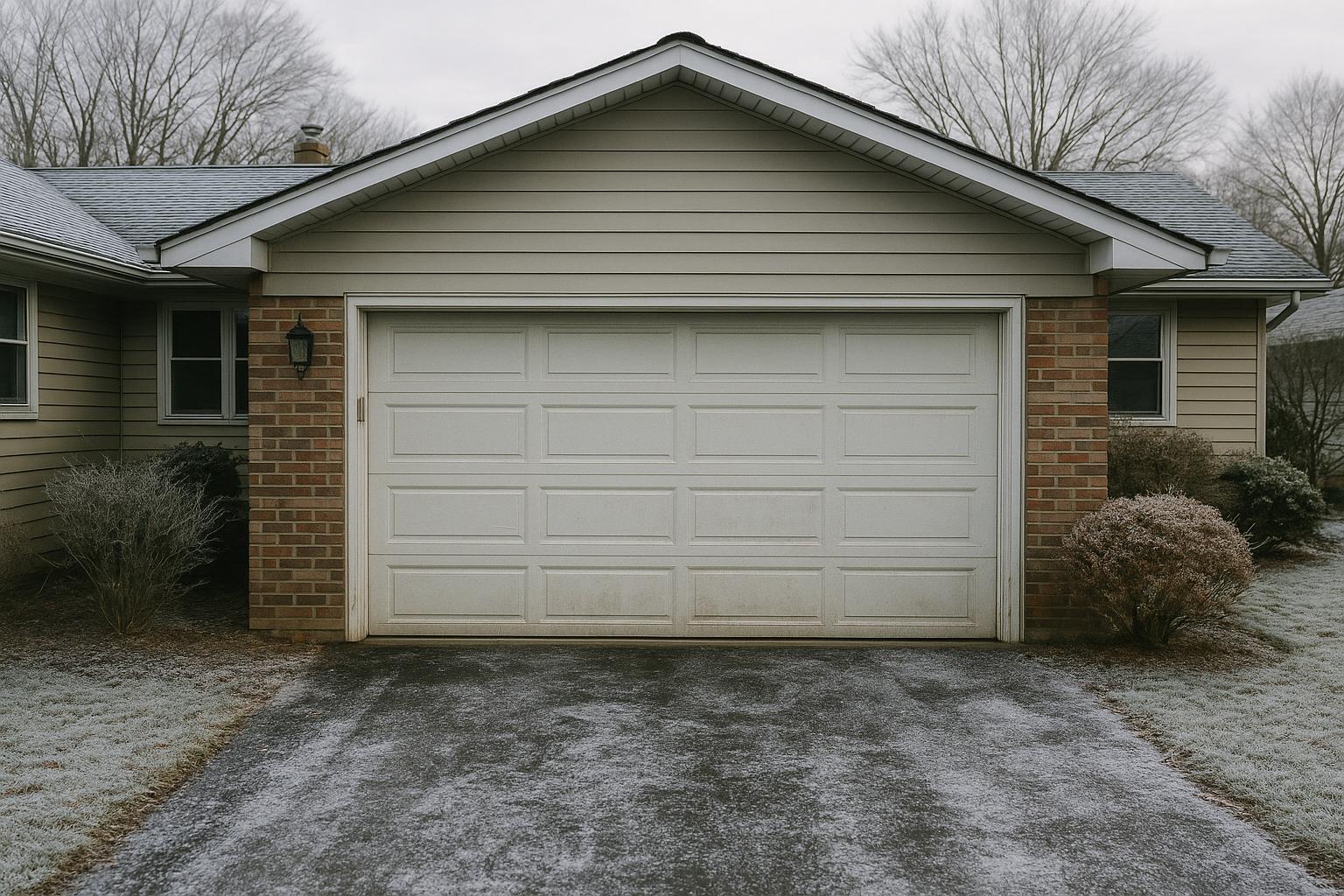
Winter Can Be Tough on Your Garage Door
When temperatures drop on Long Island, most homeowners think about insulating pipes, checking the furnace, and stocking up on rock salt. But there's one part of your home that takes a serious beating in cold weather and rarely gets the attention it deserves — your garage door.
If you've ever noticed your garage door moving slower than usual on a freezing morning, making strange noises, or refusing to close all the way, you're not imagining things. Cold weather creates real mechanical challenges for garage doors, and if you live in Holbrook or the surrounding areas, you know our winters can deliver some harsh conditions.
Here's a closer look at exactly how cold temperatures affect your garage door system and what you can do to keep everything running smoothly through the season.
Metal Contracts in the Cold
This is basic physics, but it has a real impact on your garage door. When temperatures drop, the metal components of your garage door system — including springs, tracks, hinges, and hardware — contract slightly. That contraction can cause several problems:
- Tighter tolerances in the tracks can make the door feel sluggish or cause it to bind as it moves up and down.
- Springs lose some flexibility, which means they have to work harder to lift the door. This puts extra stress on both the springs and the opener motor.
- Bolts and brackets can shift, leading to misalignment that causes scraping, squealing, or uneven movement.
In most cases, these issues resolve once temperatures warm up. But repeated cycles of freezing and thawing can accelerate wear on components that are already aging, leading to failures that might not have happened until spring or summer.
Lubricant Thickens and Stops Working
Your garage door relies on proper lubrication to move quietly and efficiently. The rollers, hinges, springs, and tracks all benefit from a thin layer of lubricant that reduces friction and prevents metal-on-metal grinding.
The problem is that many standard lubricants thicken significantly in cold weather. When that happens, your door may:
- Move noticeably slower than usual
- Make grinding or squeaking noises
- Put extra strain on the opener, potentially tripping the motor's safety features
What to do: Switch to a silicone-based or lithium-based garage door lubricant. These formulas are designed to perform in a wider range of temperatures and won't gum up when it gets cold. Apply it to the rollers, hinges, spring coils, and the track where the rollers make contact. A quick application before winter sets in can prevent a lot of headaches.
Weatherstripping Sticks and Freezes to the Ground
The rubber weatherstripping along the bottom of your garage door serves an important purpose — it seals out drafts, moisture, pests, and debris. But in freezing temperatures, that rubber seal can freeze directly to your driveway or garage floor, especially if there's any moisture present.
When you hit the opener button and the door tries to lift while the seal is frozen to the ground, you can end up with a torn weatherstrip, a strained opener motor, or a door that simply won't budge.
What to do: If your door seems stuck on a cold morning, don't just keep pressing the button. Step into the garage and check whether the bottom seal has frozen to the floor. You can usually free it carefully with a flat shovel or by pouring some warm (not boiling) water along the base. To prevent it from happening in the first place, try applying a thin layer of silicone spray or cooking spray to the bottom seal before a freeze.
Your Garage Door Opener Works Harder
Cold weather doesn't just affect the door itself — it affects the opener too. When springs are stiffer, lubricant is thicker, and metal components are contracted, your garage door opener has to generate more force to lift and lower the door. For older openers or units that are already near the end of their lifespan, this extra demand can lead to:
- The opener struggling or stalling mid-cycle
- The motor overheating and shutting down
- Premature burnout of the drive mechanism
If your opener is more than 10 to 15 years old and you've noticed it struggling during cold snaps, it may be worth having it inspected before the worst of winter arrives. A professional can assess whether the unit still has enough power to handle the load or whether it's time for an upgrade.
Panels Can Crack or Warp
If your garage door is made of wood, vinyl, or even certain types of steel with foam insulation, extreme cold can cause the panels themselves to become brittle or warp. Wood doors are especially vulnerable because they absorb moisture, which then expands when it freezes. Over time, this cycle of freezing and thawing can lead to cracking, peeling paint, and structural weakness in the panels.
What to do: Inspect your garage door panels before winter. Look for cracks, peeling finish, or areas where the material seems soft or swollen. If you have a wood door, make sure the finish is intact and consider resealing or repainting any exposed areas. For steel or vinyl doors, check that the seams and joints are tight and that no insulation is exposed.
Frozen Tracks and Moisture Buildup
Moisture can accumulate inside your garage, especially if the space isn't insulated or heated. When that moisture freezes on the tracks, it can create a thin layer of ice that interferes with the rollers. You might hear popping or cracking sounds as the door moves, or the door may jerk and stutter instead of gliding smoothly.
Keeping your garage as dry as possible helps. Make sure water isn't pooling near the door, clear snow and ice from the driveway just outside the door, and wipe down the tracks periodically during the winter months.
A Pre-Winter Maintenance Check Goes a Long Way
The best way to avoid cold-weather garage door problems is to schedule a maintenance visit before winter hits. A professional technician can:
- Inspect and lubricate all moving parts with cold-weather-appropriate products
- Check spring tension and condition
- Test the opener's force settings and safety features
- Tighten hardware that may have loosened over the year
- Inspect weatherstripping and replace it if it's worn or cracked
- Identify any components that are close to failure before they break in the middle of a cold snap
For homeowners in Holbrook and nearby communities like Ronkonkoma, Holtsville, and Patchogue, a fall maintenance appointment is one of the simplest ways to avoid an emergency service call on the coldest day of the year.
Don't Wait for a Breakdown
Cold-weather garage door problems tend to happen at the worst possible time — when you're trying to get to work on a freezing morning or coming home late on a bitter night. Most of these issues are preventable with a little preparation and routine care.
If your garage door is already showing signs of cold-weather stress — slow movement, unusual noises, or an opener that seems to be working overtime — don't ignore it. Small problems in December can become expensive repairs by February.
Holbrook Garage Door Works is here to help you get ahead of winter weather. Whether you need a tune-up, a repair, or a full replacement, we'll make sure your garage door is ready for whatever the season throws at it.