
Your Garage Door Springs Are Working Harder Than You Think
Most homeowners in Holbrook don't give their garage door springs a second thought — until something goes wrong. But those tightly wound springs above your door are doing the heavy lifting every single day. A standard residential garage door weighs between 130 and 350 pounds, and the springs are responsible for counterbalancing all of that weight so your opener (and your arms, if you ever operate it manually) can move the door with minimal effort.
Over time, springs wear out. They have a finite lifespan measured in cycles — one cycle being a single open-and-close. Most standard torsion springs are rated for about 10,000 cycles, which translates to roughly 7 to 10 years for the average household. Once they reach the end of their life, they can snap without warning, leaving your door inoperable or, worse, creating a dangerous situation.
Here's how to recognize the signs that your garage door springs are failing — and what to do about it.
7 Warning Signs Your Garage Door Springs Are Failing
1. The Door Feels Unusually Heavy
Try this simple test: disconnect your garage door opener by pulling the emergency release cord, then lift the door manually. A properly balanced door with healthy springs should feel relatively light — you should be able to lift it with one hand. If the door feels extremely heavy or you can barely get it off the ground, your springs have likely lost tension and aren't doing their job anymore.
2. The Door Opens Only a Few Inches, Then Stops
If your garage door opener starts to lift the door but only gets it a few inches off the ground before stopping or struggling, weak springs are a common culprit. The opener's motor isn't designed to lift the full weight of the door on its own — it relies on the springs to handle most of the load. When the springs can't provide enough counterbalance, the opener's safety features may kick in and stop the motor to prevent damage.
3. You Hear a Loud Bang from the Garage
Many Holbrook homeowners have told us they heard what sounded like a gunshot or a car backfiring coming from their garage. That loud bang is almost always the sound of a torsion spring snapping. The spring unwinds violently when it breaks, releasing a tremendous amount of stored energy. If you've heard this sound, do not attempt to operate the door — call a professional immediately.
4. There's a Visible Gap in the Spring
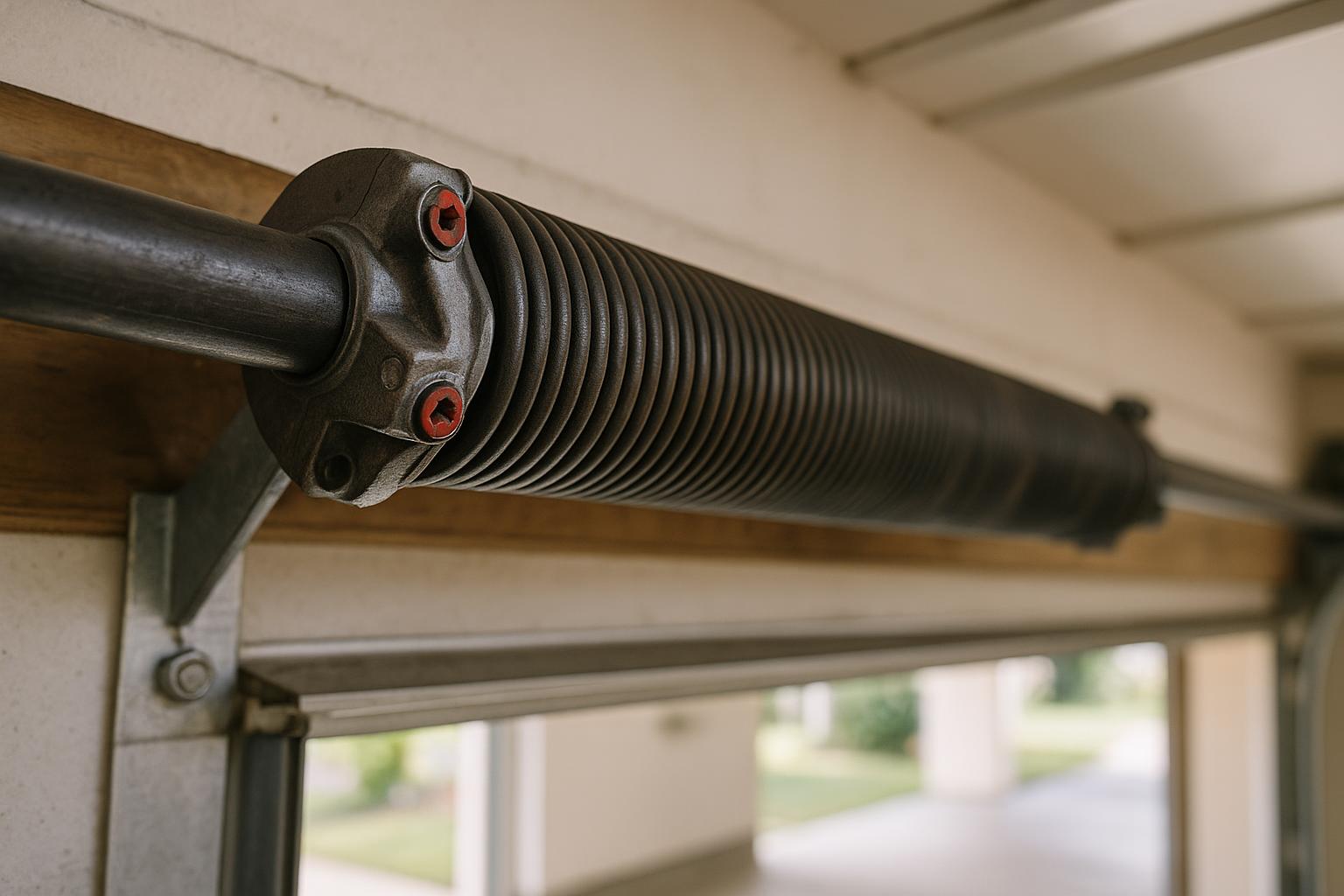
Take a look at the torsion spring mounted on the metal shaft above your garage door. An intact spring is a continuous, tightly wound coil. If you see a gap — a section where the coils have separated — the spring is broken. This is one of the most obvious visual indicators and means the door should not be used until the spring is replaced.
5. The Door Closes Too Fast
When springs are functioning properly, they control the speed at which your garage door descends. A door that slams shut or drops faster than normal is a sign that the springs are no longer providing adequate resistance. This is a serious safety concern, especially for households with children or pets who may be near the door when it closes.
6. The Door Looks Crooked or Uneven
If your garage door has two extension springs (one on each side) and only one of them breaks, the door may open unevenly — one side lifting higher than the other. This puts stress on the tracks, cables, and opener, and can cause additional damage if not addressed quickly. If your door looks crooked when it's partially open, a broken spring on one side is a likely cause.
7. Cables Are Loose or Hanging
The lifting cables on your garage door work in tandem with the springs. When a spring breaks, the cables can lose tension and appear loose, dangling, or even unwound from their drums. Loose cables are a telltale sign of a spring failure and another reason to stop using the door until repairs are made.
Can You Replace Garage Door Springs Yourself?
We understand the DIY spirit — plenty of homeowners around Holbrook, Ronkonkoma, and Patchogue are handy and capable of tackling home repairs. But garage door spring replacement is one job we strongly recommend leaving to professionals. Here's why:
- Extreme tension: Torsion springs are wound under tremendous force. A spring that slips during installation can cause severe injuries, including broken bones, lacerations, and worse.
- Specialized tools required: Proper spring replacement requires winding bars, vice grips, and other tools that most homeowners don't have on hand. Using the wrong tools — like screwdrivers or pliers — is a leading cause of DIY spring injuries.
- Precise calibration: Springs must be wound to a specific number of turns based on the door's weight, height, and spring dimensions. Incorrect winding leads to a door that's unbalanced, which wears out your opener prematurely and creates safety risks.
- Risk of further damage: An improperly installed spring can damage cables, drums, tracks, and the opener, turning a straightforward repair into a much more expensive project.
A trained technician can replace your springs safely in about an hour, and you'll have peace of mind knowing the job was done correctly.
How Long Do Replacement Springs Last?
Standard torsion springs are rated for approximately 10,000 cycles. If you use your garage door four times a day, that works out to about seven years. However, you can opt for high-cycle springs rated for 25,000 or even 50,000 cycles. These cost more upfront but can last 15 to 25 years, making them a smart long-term investment — especially if you plan to stay in your home.
At Holbrook Garage Door Works, we always discuss your options so you can choose the spring that fits your budget and usage. We also recommend replacing both springs at the same time, even if only one has broken. Since both springs were installed together and have the same number of cycles on them, the second one is likely close to failing too. Replacing both saves you from paying for a second service call in the near future.
Preventive Maintenance Makes a Difference
You can extend the life of your garage door springs with some basic maintenance:
- Lubricate the springs with a silicone-based spray or white lithium grease every six months. This reduces friction and helps prevent rust, which weakens the metal over time.
- Schedule annual inspections. A professional tune-up includes checking spring tension, inspecting cables, tightening hardware, and lubricating moving parts. Small issues caught early can prevent sudden failures.
- Minimize unnecessary cycles. Every open-and-close counts toward the spring's lifespan. If you tend to use your garage door as your primary entrance, consider whether some trips could use the front door instead.
Our maintenance plans are designed to help homeowners throughout Holbrook and surrounding communities like Lake Grove, Holtsville, and Sayville keep their garage doors operating safely and reliably for years to come.
Don't Wait for a Spring to Snap
A broken garage door spring is more than an inconvenience — it's a safety hazard and it leaves your home or business vulnerable. If you've noticed any of the warning signs above, or if it's been more than seven years since your springs were installed, it's time to have them inspected.
Holbrook Garage Door Works offers fast, professional spring repair and replacement throughout Holbrook and the surrounding area. We carry a wide selection of springs on our trucks so most repairs can be completed in a single visit. Whether you need an emergency repair or want to schedule a routine inspection, we're here to help — give us a call today.