
Your Garage Door Is Trying to Tell You Something
If you've noticed your garage door getting louder lately, you're not alone. It's one of the most common complaints we hear from homeowners in Holbrook and across Long Island. A garage door that once operated quietly now rattles the walls, wakes up the family, or makes a grinding sound that sets your teeth on edge.
Here's the thing — garage doors don't just get noisy for no reason. Every unusual sound is a clue about what's going on with the hardware, the opener, or the door itself. Some noises are easy fixes you can handle on your own. Others are early warnings that something is about to fail — and ignoring them can lead to expensive repairs or even a safety hazard.
Let's break down the most common garage door sounds, what causes them, and what you should do about each one.
Squealing or Screeching
A high-pitched squeal when your garage door opens or closes is usually a lubrication issue. Metal parts like rollers, hinges, and springs need to move smoothly against each other. When they dry out, friction creates that unmistakable screech.
What to do: Apply a silicone-based or lithium-based garage door lubricant to the rollers, hinges, springs, and tracks. Avoid using WD-40 as a long-term solution — it's a solvent, not a true lubricant, and it dries out quickly. If the squealing continues after lubrication, the rollers themselves may be worn out and need replacement.
Grinding or Scraping
A grinding noise often means metal is dragging against metal in a way it shouldn't be. This can happen when:
- The tracks are misaligned, causing the rollers to scrape against the sides
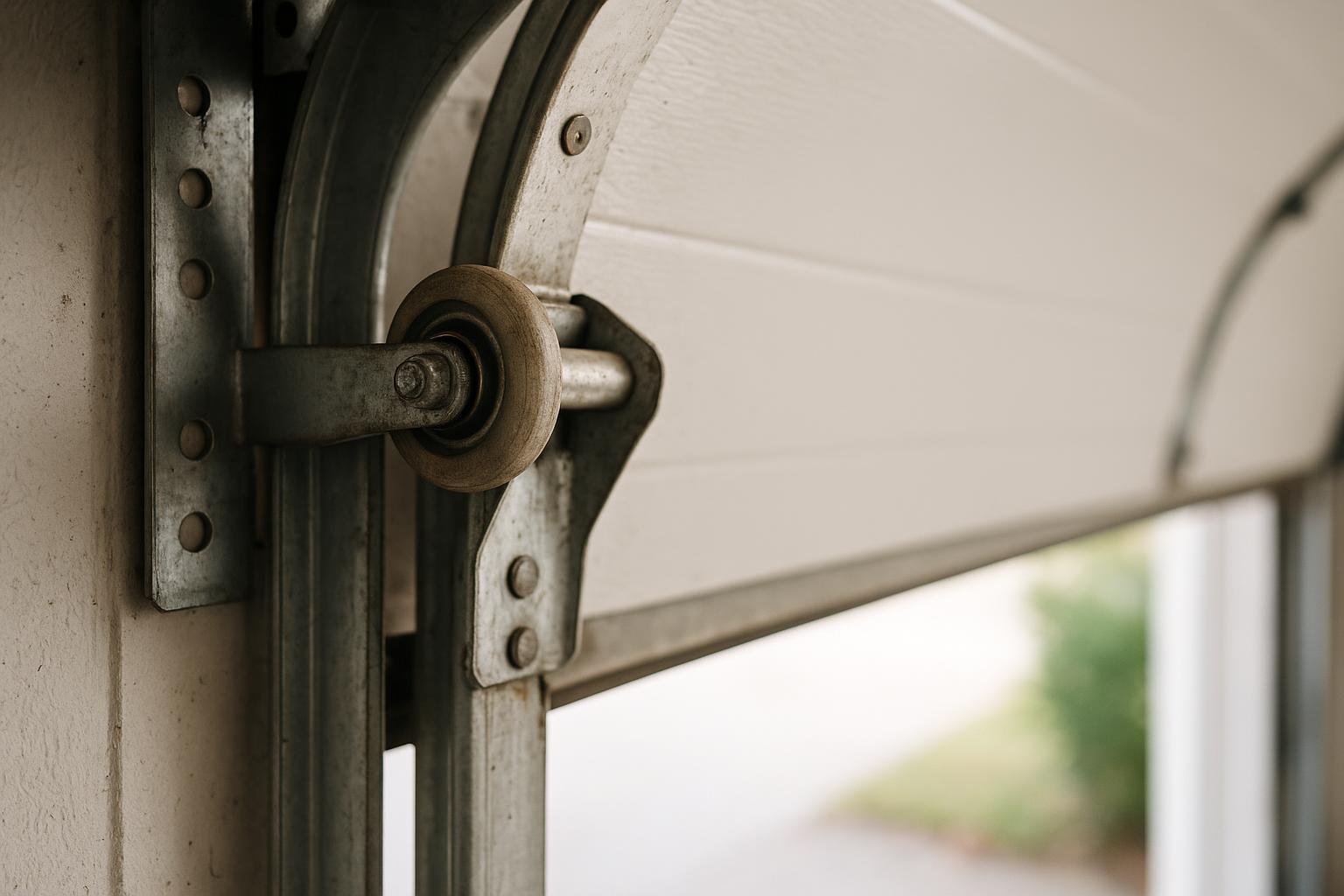
- Rollers are worn, cracked, or have lost their bearings
- The door itself has shifted and is rubbing against the frame
Grinding sounds tend to get worse over time, not better. If your garage door is making this kind of noise, take a close look at the tracks. Are they bent or pushed inward? Do the rollers look chipped or wobbly? If anything looks off, it's worth having a technician inspect the system before the problem escalates.
Rattling or Vibrating
Rattling is one of the most common garage door noises, and it's often the easiest to fix. Loose hardware is usually the culprit. Over time, the constant vibration of the door opening and closing can loosen nuts, bolts, and screws throughout the system.
What to do: Grab a socket wrench and tighten all the bolts on the tracks, brackets, and hinges. Check the bolts that attach the opener to the ceiling as well — a loose mounting bracket can amplify vibrations through the entire garage. If you have a chain-drive opener, the chain itself may need to be tightened, as a slack chain will slap and rattle during operation.
Banging or Popping
A loud bang or pop when the door starts moving is more concerning. This often points to a problem with the torsion springs. As springs age and lose tension, they can shift or bind, releasing energy in sudden bursts that create that startling bang.
Popping sounds can also occur when panels are warped or when the door gets stuck momentarily before breaking free. In either case, this is a sound you shouldn't ignore. Spring-related issues can be dangerous to diagnose and repair without the right tools and experience.
What to do: Don't attempt to adjust or replace torsion springs yourself. These components are under extreme tension and can cause serious injury. Call a professional to inspect the springs and related hardware.
Humming or Buzzing (But the Door Won't Move)
If you press the button and hear the motor humming or buzzing but the door doesn't move, the opener's motor is running but can't engage the door. Common causes include:
- A stripped gear inside the opener unit
- The disconnect switch has been activated (check for a dangling rope or lever)
- The door is locked or obstructed and the motor can't overcome the resistance
Start by checking whether the manual release cord has been pulled. If it has, re-engage it and try again. If the motor continues to hum without moving the door, the internal gears may need to be replaced — a common repair for openers that are five or more years old.
Ticking or Clicking
A rhythmic ticking or clicking as the door moves is typically related to the rollers or the chain and sprocket system in the opener. Worn roller bearings will click as they rotate, and a chain-drive opener with a worn sprocket can produce a steady ticking sound.
What to do: Inspect the rollers for visible wear. Nylon rollers tend to be quieter and last longer than steel rollers, so upgrading can solve the noise problem and extend the life of your system. If the sound is coming from the opener itself, the sprocket or gear assembly may need servicing.
When Noise Means It's Time for an Upgrade
Sometimes a noisy garage door isn't broken — it's just old. If your door is 15 to 20 years old and the sounds keep coming back no matter what you do, it may be more cost-effective to invest in a new door or opener rather than continuing to patch things up.
Modern garage doors and openers are engineered to run significantly quieter than older models. Belt-drive openers, for instance, are nearly silent compared to chain-drive systems. And newer insulated steel doors are more rigid and produce less vibration than older single-layer doors.
For homeowners in Holbrook who use their garage as a workshop, gym, or living space, reducing noise isn't just about comfort — it's about making the space usable.
A Quick Maintenance Checklist to Keep Things Quiet
You can prevent most garage door noise with a simple maintenance routine a few times a year:
- Lubricate all moving parts — rollers, hinges, springs, and tracks
- Tighten all nuts, bolts, and brackets
- Inspect rollers for cracks or wear and replace as needed
- Check tracks for alignment and clear any debris
- Test the balance of the door by disconnecting the opener and lifting it manually — it should stay in place when halfway open
- Listen carefully during operation and note any new or changing sounds
Don't Wait Until the Noise Becomes a Breakdown
A noisy garage door is easy to live with — until it isn't. What starts as an annoying rattle can turn into a broken spring, a derailed door, or a burned-out opener motor. The sounds are there for a reason, and addressing them early almost always saves you money and hassle down the road.
If your garage door is making sounds you can't identify or fix on your own, Holbrook Garage Door Works is here to help. We'll diagnose the problem, explain your options, and get your door running smoothly and quietly again. Give us a call or reach out online to schedule a service visit.