
A Frustrating Problem That's More Common Than You Think
You press the button on your garage door remote, the door begins its descent, and then — just before it reaches the floor — it suddenly reverses and goes right back up. If this scenario sounds familiar, you're not alone. This is one of the most common garage door complaints we hear from homeowners in Holbrook and the surrounding areas, and it can range from a simple fix to a sign of a more serious issue.
The good news is that your garage door is actually doing exactly what it's designed to do. Modern garage door openers are equipped with safety features that force the door to reverse when they detect an obstruction or a malfunction. The challenge is figuring out why the system thinks something is wrong. Let's walk through the most common causes and what you can do about each one.
1. Misaligned or Dirty Safety Sensors
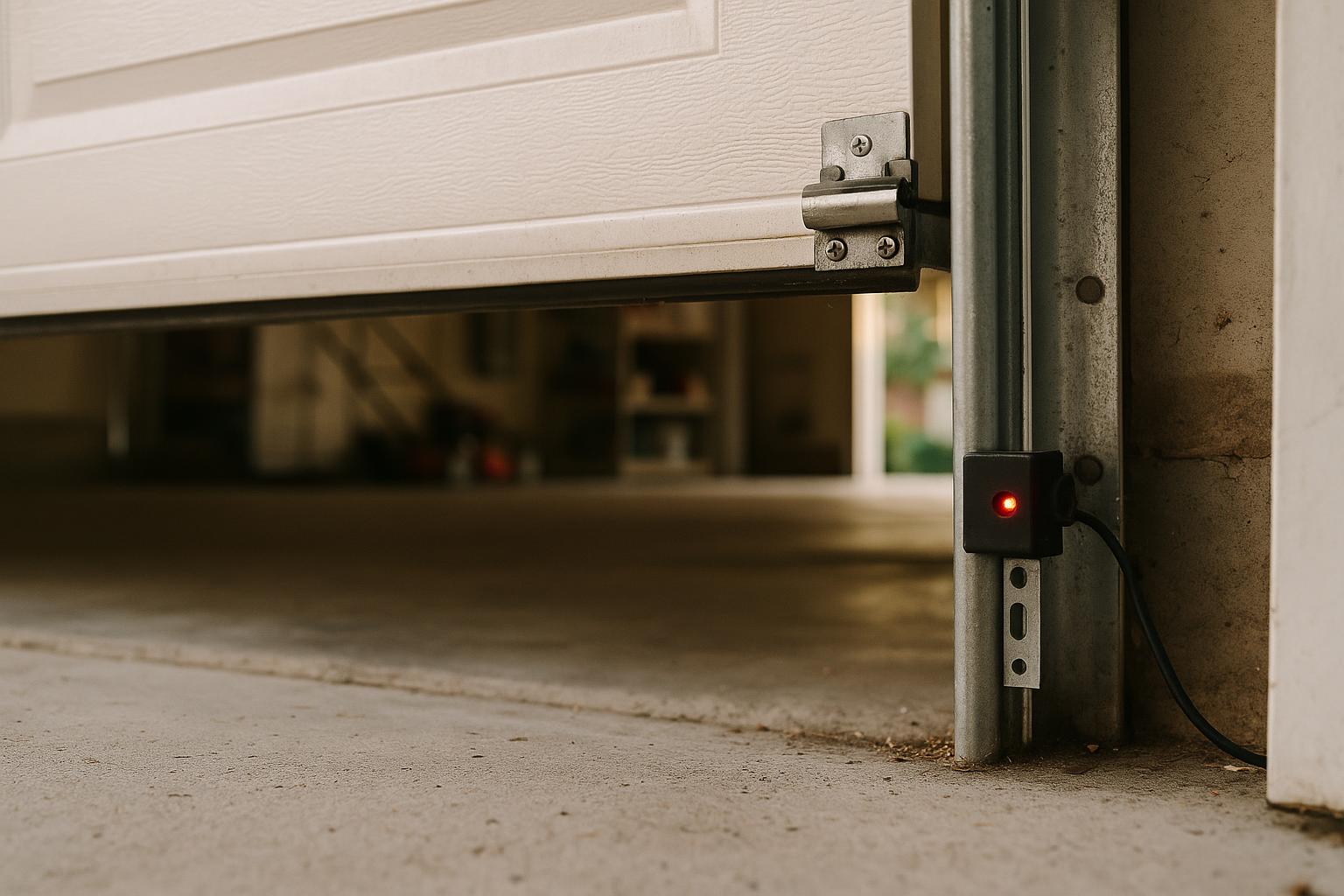
This is the number one reason garage doors reverse before closing completely. Federal law has required photoelectric safety sensors on all residential garage door openers since 1993. These small sensors sit near the bottom of your garage door tracks on either side, and they project an invisible beam across the opening. If anything breaks that beam — a bike, a trash can, a leaf, or even a spider web — the door will reverse.
Here's what to check:
- Clean the sensor lenses. Dust, dirt, and cobwebs can accumulate over time and block the beam. Wipe both lenses gently with a soft cloth.
- Check alignment. Each sensor typically has a small LED light. If one is blinking instead of glowing steadily, the sensors are likely out of alignment. Gently adjust the misaligned sensor until both lights are solid.
- Look for obstructions. Make sure nothing is sitting in the path of the beam, even something small on the garage floor.
If you've cleaned and realigned the sensors and the problem persists, the wiring connecting the sensors to the opener may be damaged, which is something a professional should inspect.
2. Incorrect Close-Limit Settings
Your garage door opener has adjustable settings called close-limit switches that tell the motor exactly how far the door should travel before it's considered fully closed. If these settings are off — even by a small margin — the opener may interpret the door hitting the floor as resistance from an obstruction, triggering an automatic reversal.
This is especially common after a new opener installation or when an existing opener has been serviced. The adjustment process varies by manufacturer, but it usually involves turning a small screw or dial on the back or side of the opener unit. If you're not comfortable making this adjustment yourself, our team at Holbrook Garage Door Works can calibrate it quickly during a service call.
3. Worn or Broken Springs
Garage door springs do the heavy lifting — literally. They counterbalance the weight of the door so the opener motor doesn't have to work as hard. When a spring is worn, weakened, or broken, the door becomes significantly heavier. The opener senses this extra resistance and reverses the door as a safety precaution.
Signs that your springs may be the culprit include:
- The door feels noticeably heavy when you try to lift it manually
- You hear loud creaking or grinding sounds during operation
- The door opens unevenly or appears crooked
- You notice a visible gap in one of the springs above the door
Important: Garage door springs are under extreme tension and can cause serious injury if handled improperly. Spring repair and replacement should always be left to trained professionals. This isn't a DIY project — it's one of the most dangerous repairs in home maintenance.
4. Problems with the Tracks or Rollers
If your garage door tracks are bent, dented, or clogged with debris, the door may encounter resistance as it travels downward. Similarly, worn-out or rusted rollers can create friction that the opener interprets as an obstruction. Inspect your tracks visually for any obvious damage or buildup, and listen for scraping or grinding noises when the door moves.
Minor debris can be cleaned out with a damp cloth, but bent tracks or damaged rollers need professional attention to avoid making the problem worse.
5. Worn Gear or Motor Issues in the Opener
Garage door openers contain internal gears — often made of nylon — that wear down over time. A stripped gear can cause the opener to lose its ability to control the door's movement properly, leading to erratic behavior including unexpected reversals. You might also notice a humming or buzzing sound when the opener runs but the door barely moves.
If your opener is more than 10 to 15 years old and experiencing these symptoms, it may be more cost-effective to replace the unit entirely rather than repair it. Newer models offer better safety features, quieter operation, and smart home compatibility that many Holbrook homeowners appreciate.
6. Weather and Temperature Changes
Living on Long Island means dealing with significant temperature swings throughout the year. Cold weather can cause metal components to contract, lubricants to thicken, and weatherstripping along the bottom of the door to stiffen. All of these factors can create just enough extra resistance to trigger a reversal.
Regular seasonal maintenance goes a long way toward preventing weather-related issues. Lubricating moving parts with a silicone-based spray before winter arrives and checking your weatherstripping for cracks or hardening can save you from a frustrating malfunction on the coldest morning of the year.
When to Call a Professional
Some of the fixes above — cleaning sensors, removing obstructions, and basic lubrication — are well within the ability of most homeowners. But if you've gone through the troubleshooting steps and your door is still reversing, or if the problem involves springs, tracks, or internal opener components, it's time to call in a professional.
At Holbrook Garage Door Works, we diagnose and fix reversing garage doors regularly for homeowners across Holbrook, Ronkonkoma, Patchogue, Sayville, and the surrounding communities. We carry common replacement parts on our service vehicles so most repairs can be completed in a single visit.
Don't Ignore a Reversing Garage Door
It might be tempting to just keep pressing the button until the door finally stays down, but ignoring a reversing garage door can lead to bigger problems. You could be putting unnecessary strain on your opener motor, wearing out components faster, or — worst case — disabling a safety feature that's designed to protect your family.
If your garage door won't stay closed and you've exhausted the basic troubleshooting steps, give us a call. We'll get to the bottom of the problem and get your door working reliably again. That's what we do every day here in Holbrook, and we'd be happy to help.